The Fraser alphabet
Around 1915, two men — a Karen preacher and a British missionary — wrote the Lisu language into being. Their alphabet, built from Latin letters some of which stand on their heads, has carried Lisu song, Scripture and story for over a century.
Letters, turned to fit the tones
The Fraser alphabet is an abugida written left to right. Consonants are uppercase Latin letters — some rotated or inverted — and the vowel a is built into each letter, written only when it changes. Tone is marked with small punctuation-like signs, and nasalisation with an apostrophe.
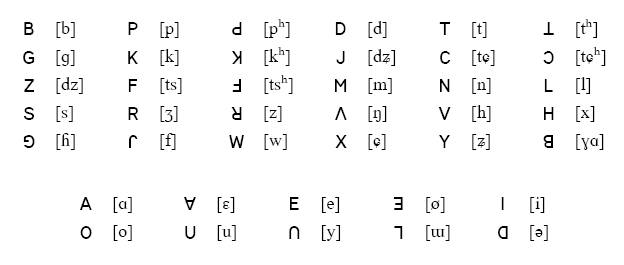
Each consonant carries the vowel ꓮ (a) unless another vowel is written. The comma is ꓾, the full stop ꓿, and tones such as ꓸ ꓹ ꓺ ꓻ ꓼ ꓽ ride above the syllable.
The result is a compact, fast script — written on everything from catechisms and hymnals to text messages today.
From 1915 to today
A century in the life of a script — devised for the Bible, adopted by a people, and finally encoded for the world's screens.
- c. 1915
A script is devised
Sara Ba Thaw, a Karen preacher from Myanmar, devises an alphabet for Lisu; the missionary James O. Fraser refines it.
- 1920s
Mark & John in print
Fraser translates and publishes the Gospels of Mark and John — the first Lisu Scripture.
- 1938
The New Testament
The complete Lisu New Testament appears (some record 1936), the year Fraser dies.
- 1950s
A pinyin rival
China introduces a pinyin-based “New Lisu” script; the Fraser alphabet endures.
- 1968
The full Bible
The complete Lisu Bible — Old and New Testaments — is published.
- 1992
Official recognition
Nujiang authorities recognise the Fraser alphabet as the official Lisu script.
- 2009
Into Unicode
The Lisu block (U+A4D0–U+A4FF) is added to Unicode 5.2.
- Today
Digital & living
Fonts such as Noto Sans Lisu carry the script to every screen; it stays in everyday use.
Two men, one script
Behind the alphabet stand a Karen preacher and a British missionary — joined later by the Cookes, the Kuhns and the Morses, who carried the translation forward.
Sara Ba Thaw
A Karen preacher from Myanmar who devised the alphabet around 1915, then went on to evangelise the Lisu.
James O. Fraser
A British missionary of the China Inland Mission who refined the script, translated Scripture, and planted the church among the Lisu of Yunnan.
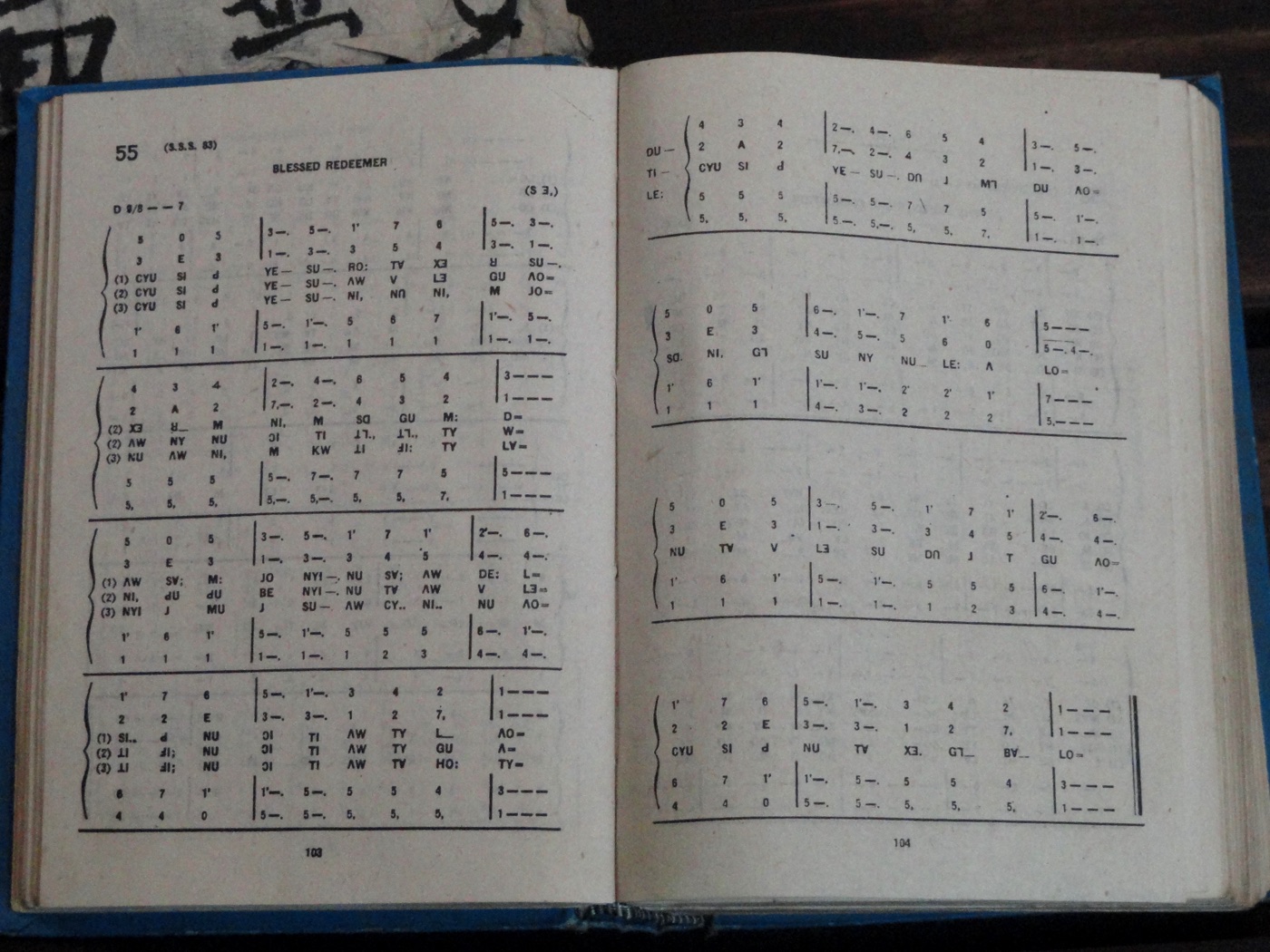
Christianity & the Lisu Bible
The alphabet was born for the Bible — and it transformed Lisu faith. Fraser and Ba Thaw first printed a catechism and portions of Scripture, then the New Testament, then the whole Bible.
Catechism & portions
The first Lisu publications in the new script.
New Testament · 1938
The complete New Testament (some record 1936), the year Fraser died.
Full Bible · 1968
Old and New Testaments together, published under the OMF.
Revised & kept alive
A Trinitarian Bible Society edition in 1980; revision continues today.
A Christian majority
Conversion spread quickly from the early 20th century. By 2008 there were more than 700,000 Christian Lisu in Yunnan and 450,000 in Myanmar — roughly four-fifths of the people.
The first missionary
James O. Fraser reached the Lisu of Yunnan through the China Inland Mission; colleagues Allyn and Leila Cooke, Isobel and John Kuhn, and Russell and Gertrude Morse carried the work onward.
Faith, kept in Lisu
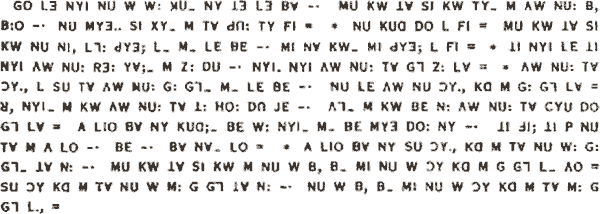
The script made the faith local — hymnals, catechisms and the Bible read aloud in Lisu, not borrowed from another tongue.
A living script
Recognised officially in 1992 and encoded in Unicode in 2009, the Fraser alphabet has moved from missionary presses to the screens in Lisu pockets.
Official
Nujiang Lisu Autonomous Prefecture recognises the Fraser alphabet as the official Lisu script.
Digital
Unicode blocks U+A4D0–U+A4FF (and the 2020 supplement) put the letters on every modern device.
Everyday
From hymns and the Bible to messages and signs, the alphabet remains the Lisu way of writing.