ꓡꓲꓢꓴ · Lisu

People of the mountain highlands

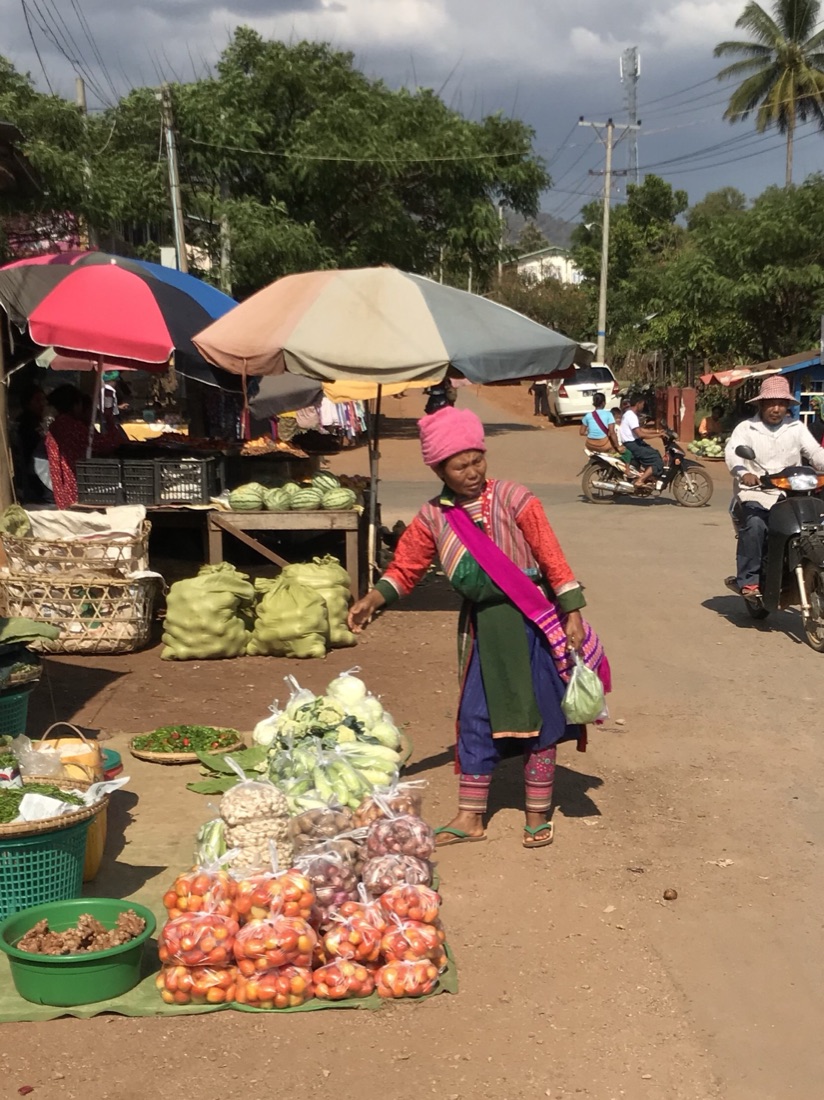
The Lisu are a Tibeto-Burman people of the highlands, spread across Southwest China, Myanmar, Thailand, and India — bound together by a shared language, a distinctive script, and a way of life shaped by the mountains.

Lisu Tibeto-Burman Four countries ≈ 1.3 million people
Photo: Chentaocui · CC BY 4.0
Who they are

The highland Lisu

The Lisu are an indigenous highland people whose villages climb the steep river gorges of the eastern Himalaya and the mountains of Southeast Asia. Their name for themselves is simply Lisu — ꓡꓲꓢꓴ.

Around 1.3 million Lisu live across four countries of the highlands — China, Myanmar, Thailand and India.

  1. Ancient

    Di-Qiang origins

    The Lisu descend from the Di-Qiang peoples of the eastern Tibetan plateau — close kin to the Yi and Naxi.

  2. Tang dynasty

    “Li Su” in the records

    Tang chronicles already name the “Li Su” among the Wuman of the western mountains.

  3. The gorges

    Three Parallel Rivers

    They settled the steep gorges of the Salween, Mekong and Yangtze in northwest Yunnan.

  4. 16th–19th c.

    Southward migration

    Over the centuries they crossed into Myanmar and Thailand, and later to Arunachal Pradesh in India.

  5. c. 1915

    Script & faith

    The Fraser alphabet and Christianity arrive, reshaping Lisu literacy and belief.

  6. Today

    A living people

    Across four countries, the Lisu keep their language, their script and their festivals alive.

Language & script

A script written into being

The Lisu language belongs to the Lolo-Burmese branch of the Tibeto-Burman family, its two main dialects — Nujiang and Luqian — still mutually intelligible. Around 1915, a Karen preacher named Sara Ba Thaw and the British missionary James O. Fraser devised a written form for it — the Fraser alphabet — using Latin letters, some turned on their head, to capture its tones.

ꓡꓲꓢꓴ — “Lisu,” written in the Fraser alphabet.

Pictographs

In the 1920s, Wang Renbo of Weixi devised a pictographic script of more than a thousand characters.

New Lisu

A pinyin-based alphabet followed in the 1950s, though the Fraser alphabet remains in everyday use.

Oral epics

The narrative poem “Cu Zi Mu Gua” runs some 1,500 lines; myths and proverbs carry the people’s history.

Festivals

A year of festivals

The Lisu year turns to the rhythm of its festivals — from the New Year among the cherry blossoms to the harvest bonfires of autumn.

01

Kuoshi — New Year

The New Year opens around cherry-blossom season with sticky rice cakes set on peach and pear trees for a good harvest — and, in some villages, fed first to dogs who first brought the grain. Crossbow, song and dance fill the gathering grounds.

02

Bathhouse Festival

During Spring Festival, families camp by the Nujiang hot springs for days of bathing held to bring health and strength. At Liuku, a hot-spring poetry contest has run for over a century.

03

Knife Mountain & Fire

In Dehong and Tengchong, performers walk barefoot over chestnut coals and climb a ladder fitted with 32 sharpened knives — rites of courage offered for a good harvest.

04

New Tasting Festival

When the rice and corn ripen, families brew new wine and gather around a bonfire while elders play the pipa and moon guitar, celebrating the first taste of the harvest.

Music & dance

Song as a second language

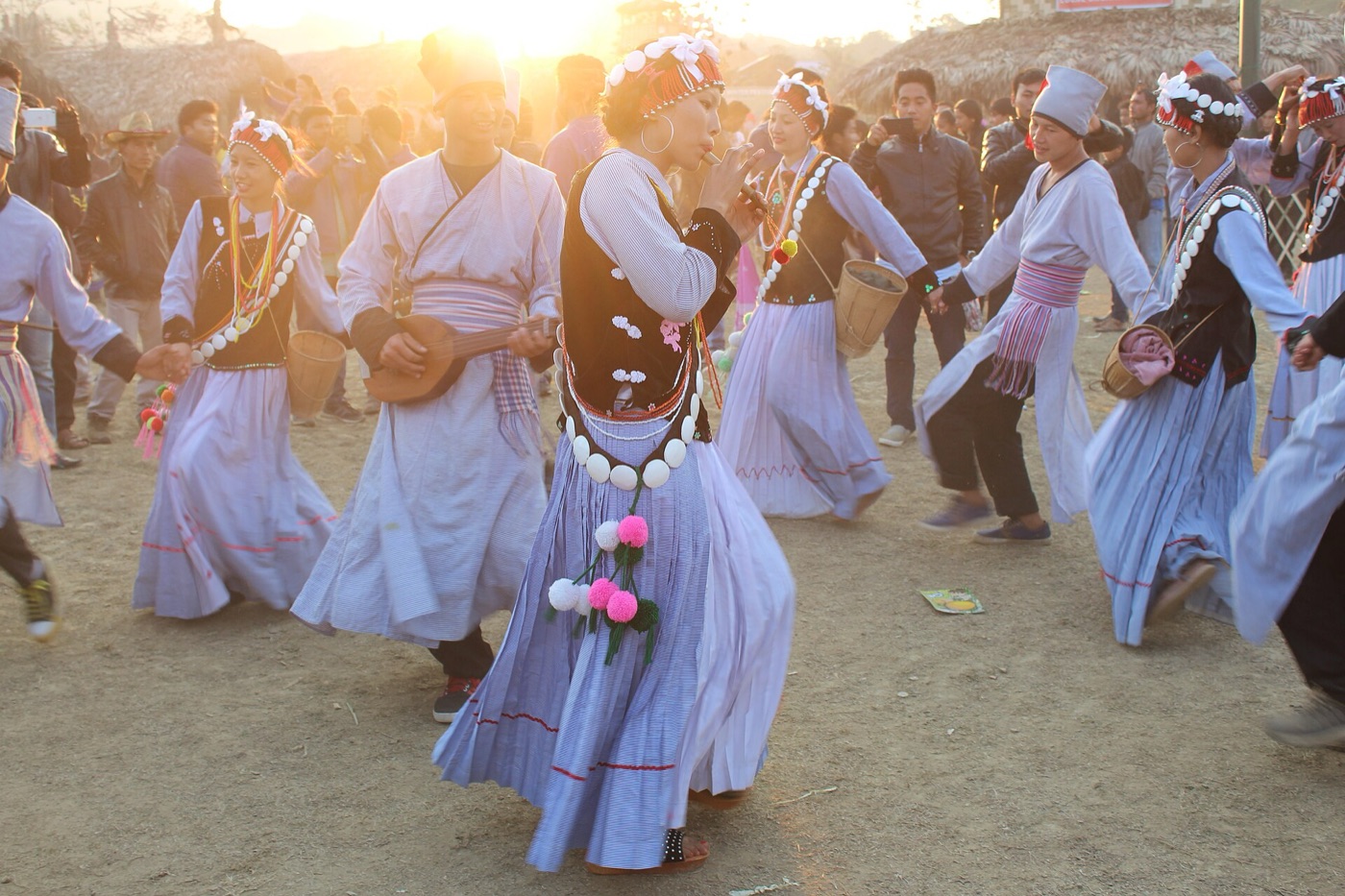
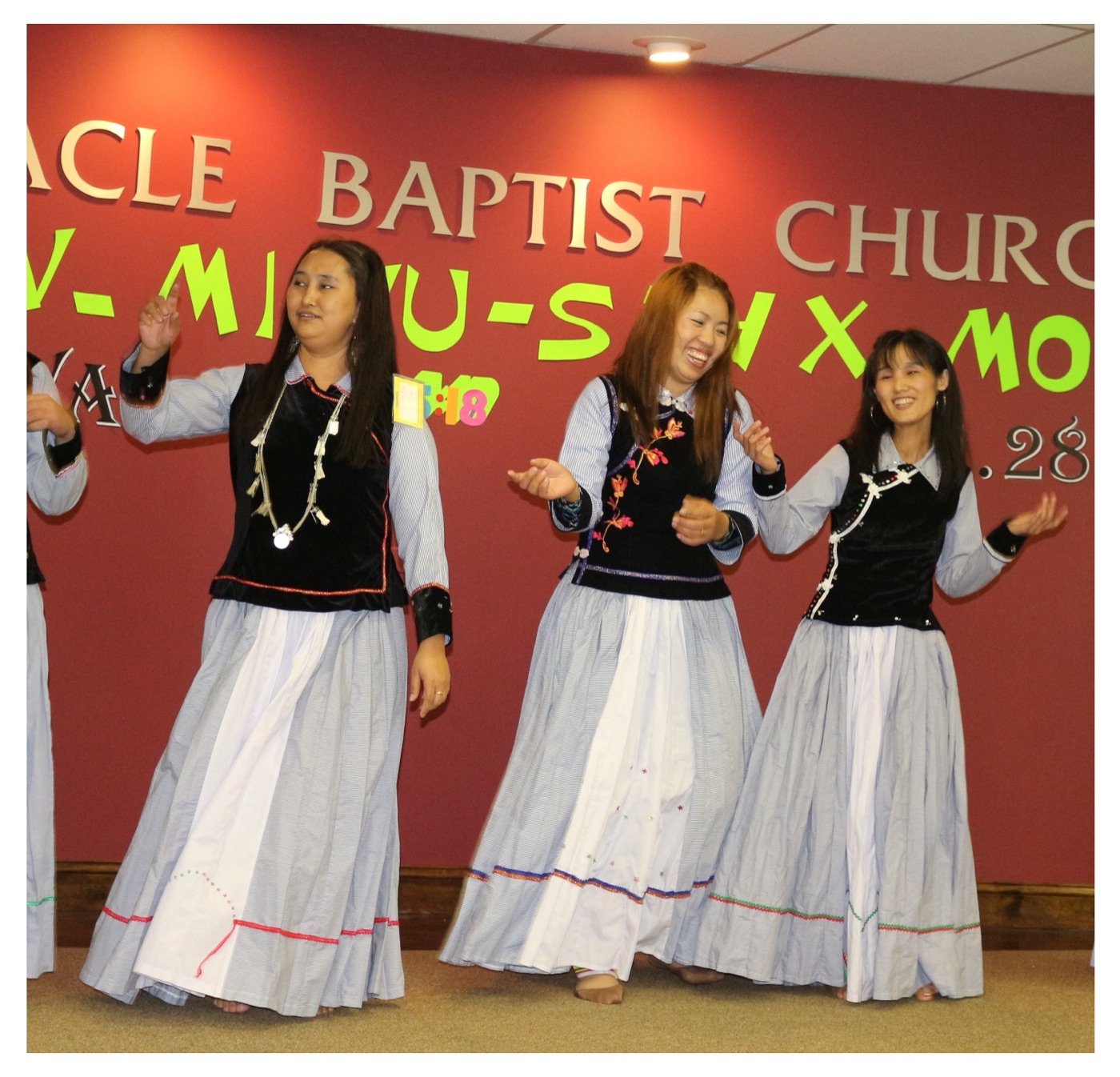
The Lisu call song their second language — it accompanies work, weddings, funerals, even the settling of disputes.

Lisu folk dance performance
A Lisu folk dance. Photo: Jemima Yobin · CC BY-SA 4.0
01

Six kinds of song

Ancient songs, love songs, improvised contests, sacrificial and funeral songs, and songs of praise — sung with a vibrato on short notes and a deep, resonant plain tone on the long ones.

02

The pipa & kouxian

The four-stringed Lisu pipa, smaller than its Han cousin, marks pitch with resin rather than frets. The kouxian — a bamboo jaw harp the length of a finger — hums a soft melody through the mouth.

03

Dances of animals & life

Dancers imitate the monkey, the drinking dove and the king of birds; in Achi Mu Gua they stamp out a goat’s playful fight. Circles form with musicians at the center, heels striking the rhythm.

Dress & adornment

Woven on the slopes

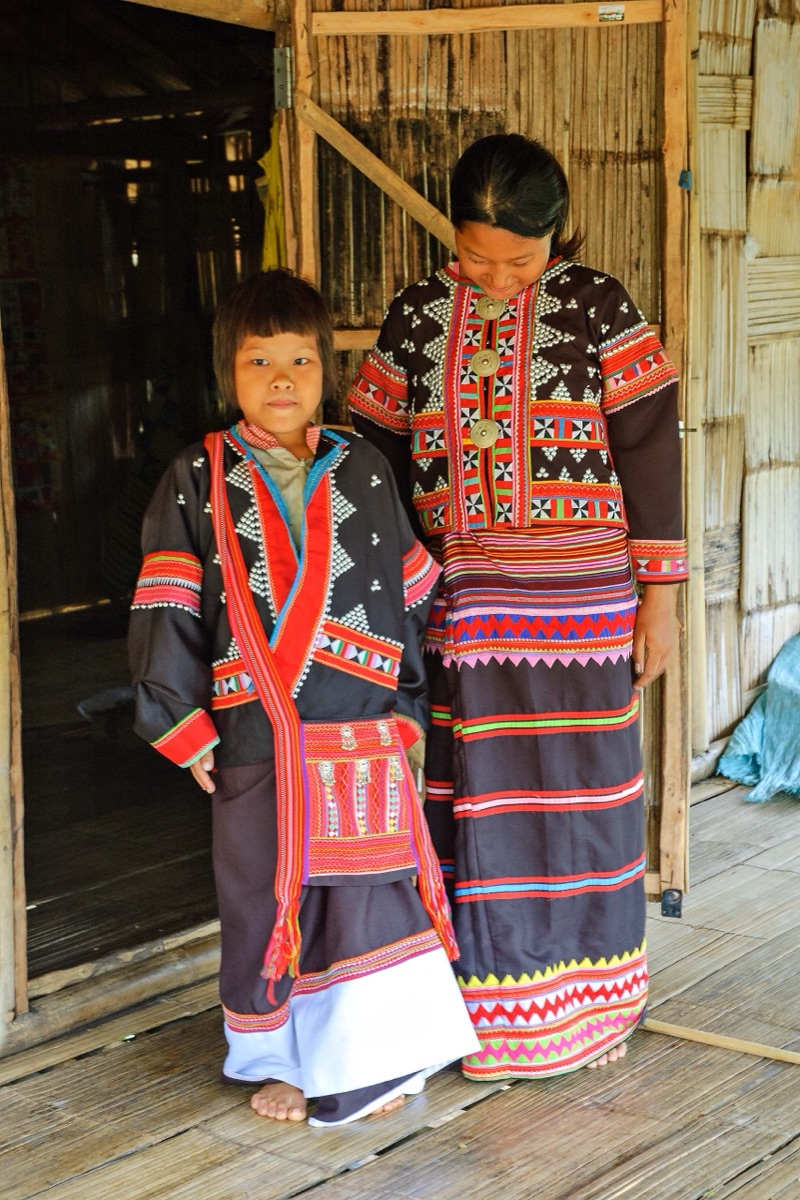
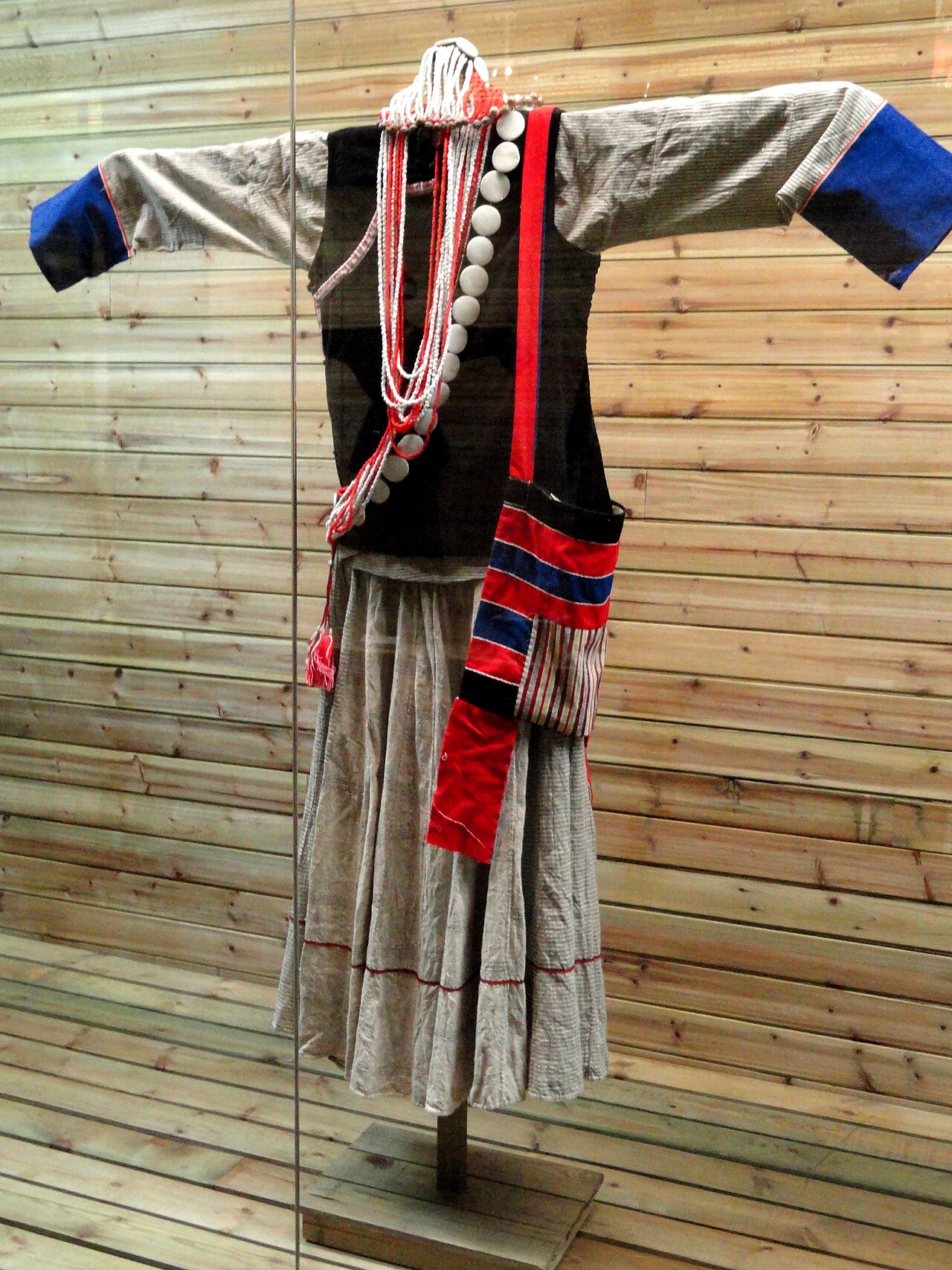
Lisu dress is spun, woven and embroidered at home — and no two regions dress alike: cloth, colour, coral and silver record a person's branch, region and rank.

Lisu woman's hemp, shell-ornamented dress, Yunnan, China
Yunnan Nationalities Museum · Daderot · Public domain
Yunnan, China

Hemp, shell & the three branches

In northwest Yunnan, women wear a hemp tunic and pleated skirt trimmed with cowrie shell and silver. The three branches read in the cloth — the Black Lisu's indigo, the White Lisu's paler hemp, the Flowery Lisu's bright embroidery — and in Fugong a married woman crowns it with the beaded Oule.
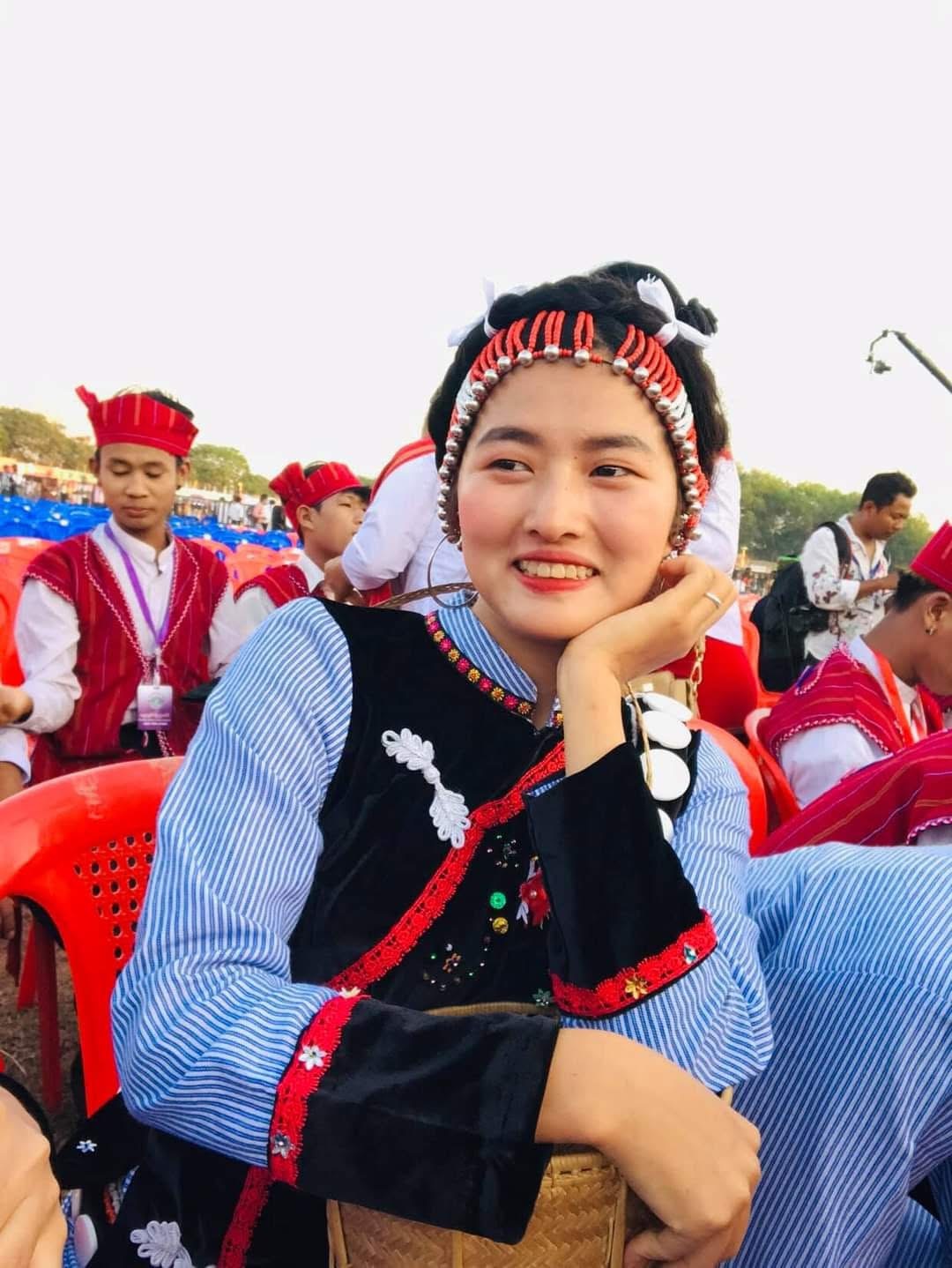
A Lisu lady in traditional dress, northern Myanmar
EricOng77 · CC BY 4.0
Northern Myanmar

Indigo across the border

In Kachin and Shan states the indigo base stays, but silver and beads take the place of shell, and married women wear coronets of coral and beadwork.

Lisu girls in traditional dress, Tha Ton, Thailand
Everhard van Eimeren · CC BY-SA 4.0
Tha Ton, Thailand

Brighter for the festival

In northern Thailand the cloth turns brighter — red, green and strings of silver coin — worn for market days, weddings and the New Year.

01

Hemp & indigo

Before woven cotton arrived, Nujiang women spun and wove their own hemp cloth on a simple four-stick loom — a handspan wide. White and black tunics, pleated skirts and a front-and-back apron marked the region.

02

The machete & quiver

Men carried a machete on the left hip and an arrow quiver on the right; a chief or wealthy man marked his rank with a single red coral in the left ear.

03

Dress for the spirits

Ni Ba shamans worked in long hemp robes with a goat-horn headdress and a long knife, and the shell-and-silver “La Ba Li Di” was worn as a charm against harm.

Belief & spirit

A world of spirits

The Lisu world is thick with spirits — more than thirty kinds, from courtyard to mountain to dream. Shamans and clan totems keep the living in balance with them; since the early twentieth century, many Lisu have also followed Christianity.

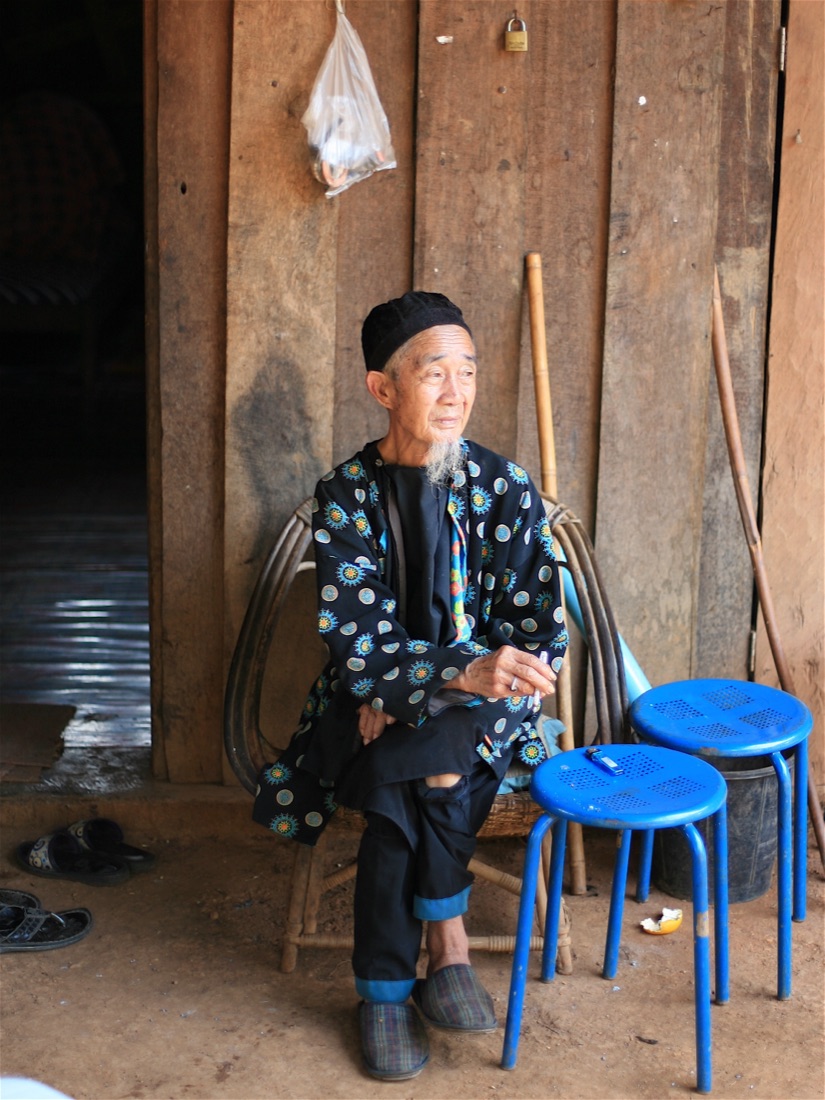
A Lisu elder
A Lisu elder — Photo: Steve Jurvetson · CC BY 2.0
01

A host of spirits

A supreme spirit governs the cosmos above a host of Ni — spirits of the courtyard, family, mountain, water, dream, blood and road. Ritual is reverent yet defiant: the dragon is prayed to for rain, then cursed if the rain fails.

02

The Ni Ba shaman

Ni Ba shamans see and control spirits, ranking above other ritual specialists. They divine with bamboo sticks, sheep bone, shells and pig liver, dressed in long hemp robes with goat horns and a long knife.

03

Clans & totems

Eighteen clans took their names from animals and plants — tiger, bear, monkey, bee, buckwheat, hemp. Each guarded a totem and a family burial grove; the Fish clan fished, the Buckwheat clan farmed.

Homes & livelihood

Built for the slopes

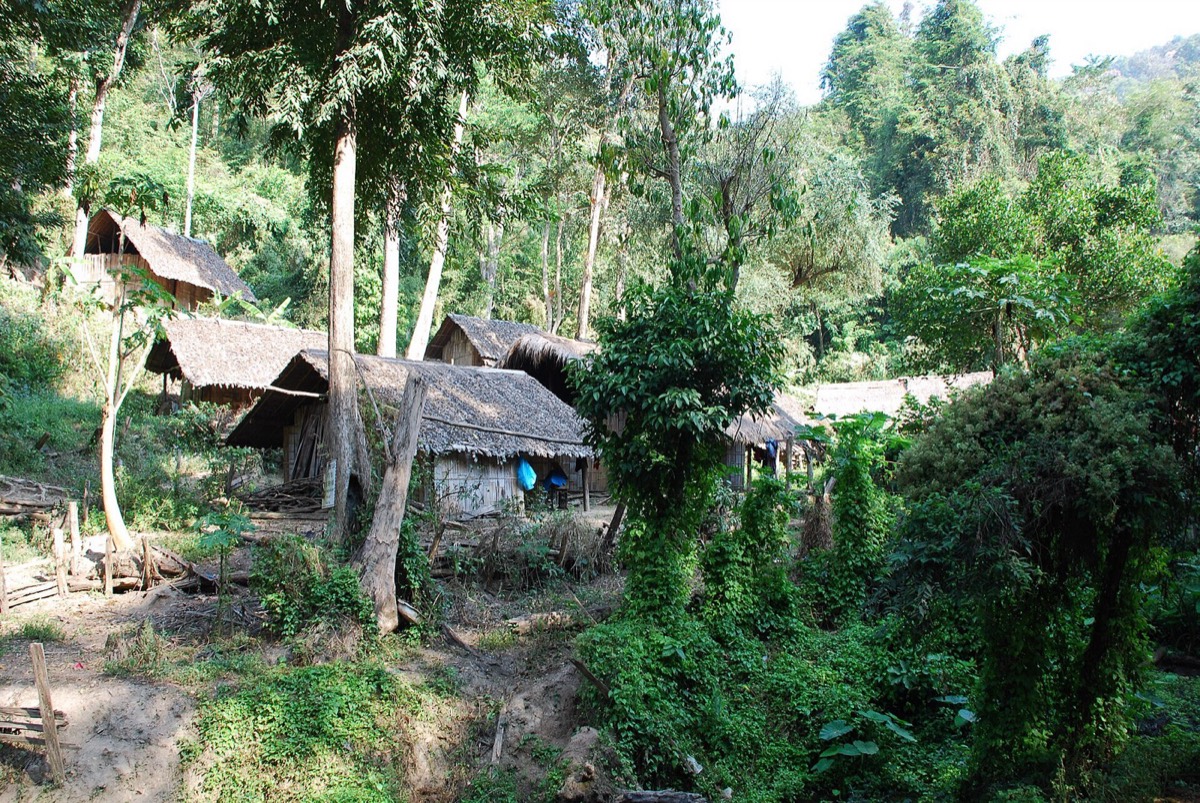
Lisu homes and livelihoods are shaped by the steep land — bamboo houses on posts, terraced fields, and the crossbow for the hunt.

A Lisu hill-tribe village among the mountains
A Lisu village near Chiang Dao, Thailand. Photo: Gunther Hagleitner · CC BY 2.0
01

Bamboo houses

On Nujiang slopes, homes rise on wooden posts with bamboo walls and thatch — a guest room around the central fire pit, and livestock penned beneath.

02

Log & earth

In Lanping and Weixi, cabins are stacked from notched logs without a single nail; further east, rammed-earth walls and wooden pillars echo Bai, Naxi and Han styles.

03

The highland farm

Buckwheat, maize and rice on terraced slopes, hemp for cloth, and the crossbow for the hunt. Shifting cultivation and mountain hunting carried the Lisu through the centuries.

On Instagram

The Lisu today

Dance, dress and festivals shared every day — photos and reels under these tags.

A people of the high mountains

Across four countries and many centuries, the Lisu have carried their language, their script, and their songs into the highlands — and onward.